
Knowing the grades of steel bars helps you buy the right reinforcement for your project. In Pakistan, deformed steel bars (saria) are mainly sold in three grades: Grade 40, Grade 60 and Grade 75. Each grade has a different strength, and each suits different kinds of structures. This guide explains what the grades mean, where each one is used, and how to choose.
See the latest steel bar prices in Pakistan for Grade 40 and Grade 60.
What Does a Steel Bar Grade Mean?
A bar’s grade tells you its minimum yield strength. Yield strength is the stress at which the steel starts to stretch permanently instead of springing back. In the ASTM A615 standard, the grade number is the yield strength in thousands of psi. For example, Grade 60 means a minimum yield strength of 60,000 psi (420 MPa).
A higher grade means a stronger bar. However, stronger bars also stretch a little less before they break, so the grade must match the structural design.
Grades of Steel Bars Compared
| Grade | Minimum yield strength | Minimum tensile strength | Typical use |
| Grade 40 | 40,000 psi (280 MPa) | 60,000 psi (420 MPa) | Small, lightly loaded work |
| Grade 60 | 60,000 psi (420 MPa) | 90,000 psi (620 MPa) | Houses, plazas, multi-storey buildings |
| Grade 75 | 75,000 psi (520 MPa) | 100,000 psi (690 MPa) | Heavy structures designed for high-strength bars |
Values are the minimums in ASTM A615. Always check the mill test certificate for the tested values of your batch.
Grade 40 Steel Bars
Grade 40 is the lowest of the three grades. It bends easily and stretches the most before breaking, so it is simple to work with on site. On the other hand, it carries less load, so a structure needs more steel to reach the same strength.
Typical uses: boundary walls, lintels, small single-storey work and other light structures, where the drawings allow it.
Grade 60 Steel Bars
Grade 60 is the standard grade for most construction in Pakistan today. It is about 50% stronger than Grade 40 and still has enough ductility for normal bending and for earthquake-resistant design.
Typical uses: columns, beams and slabs in houses of all sizes, commercial buildings, multi-storey buildings and bridges. Engineers almost always specify Grade 60 for buildings in earthquake zones. For a detailed comparison, see Grade 40 vs Grade 60 steel.
Grade 75 Steel Bars
Grade 75 is the strongest of the three. It is used where an engineer has designed the structure for high-strength reinforcement, often to reduce congestion of bars in heavily loaded members.
Typical uses: heavily loaded columns, large infrastructure and industrial structures, but only when the design calls for Grade 75. Note that a higher grade does not make a bar more resistant to rust. Corrosion protection comes from concrete cover and good site practice.
How to Choose the Right Grade
- Follow your structural drawings. The engineer designs the bar sizes and spacing for one grade. Never swap grades without approval.
- Consider the location. In earthquake-prone areas, designs follow the Building Code of Pakistan (Seismic Provisions) and normally use Grade 60.
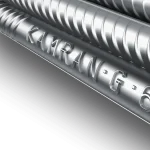
- Check what you receive. Look for the grade marks rolled onto the bars, ask for the mill test certificate, and check the weight. See how to calculate the weight of steel bars.
- Compare the total cost, not just the rate. A higher grade costs slightly more per ton, but a design made for it usually needs less steel.
How Steel Bars Get Their Strength
Most modern deformed bars are hot rolled and then quenched and self-tempered, a process often called TMT (thermo-mechanical treatment). It creates a hard outer layer and a softer, ductile core, which gives the bar both strength and bendability. To learn more, read TMT vs cold twisted steel bars and the process involved in making quality steel bars.
Kamran Steel Grades and Sizes
Kamran Steel manufactures deformed bars in Grade 40 and Grade 60 to ASTM A615, in sizes from 10 mm to 36 mm and standard 12-metre lengths. See our products or contact our sales team for help choosing the right grade.
To compare what Grade 40 and Grade 60 would cost for your project, try our steel rate calculator.
Related reading: Why Steel Bar Quality Matters · Steel Bar Testing on Site · Common Defects in Steel Bars · How to Identify Steel Grade and Top Quality Steel Bars for Building Construction · Top 10 Questions Engineers Ask When Choosing Steel Bars