The outlook for Pakistan’s steel industry is closely tied to the country’s construction, infrastructure and manufacturing plans. Steel goes into houses, plazas, roads, bridges, power projects and factories, so demand rises and falls with the wider economy. This article looks at the main opportunities and challenges facing Pakistani steel producers, and what they mean for people buying steel today.
For Kamran Steel’s own current rates, see today’s steel rate in Pakistan.
Where Pakistan’s Steel Industry Stands
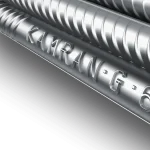
Pakistan’s steel sector is made up of a few large, established manufacturers and a large number of smaller re-rolling mills. Construction steel, especially reinforcement bars (rebar or saria), is the biggest part of the market. Much of it is produced from melted scrap and billets, either made locally or imported.
Steel use per person in Pakistan is still far below the world average. That gap is both a sign of under-development and a long-term opportunity, because steel demand usually grows as countries build more housing and infrastructure.
Opportunities for the Steel Industry
1. Housing and infrastructure demand
Pakistan has a large housing shortage and a growing urban population. At the same time, roads, bridges, energy projects and industrial zones, including projects under the China-Pakistan Economic Corridor (CPEC), all need steel. Over the long term, this is the main driver of demand for construction steel.
2. More local production
Imports of scrap, billets and finished steel put pressure on foreign exchange. Expanding local production and recycling more domestic scrap can reduce that dependence and keep more value and jobs inside the country.
3. Better technology and quality control
Modern rolling, testing and energy-saving equipment help producers make more consistent bars at lower cost per ton. For buyers, this means steel that meets standards such as ASTM A615 more reliably.
4. Regional exports
Exports are small today. However, producers that meet international standards could, in time, supply neighbouring markets.
Challenges Facing the Industry
- Energy costs and supply: steelmaking uses a lot of electricity and gas, so high tariffs and outages raise costs.
- Imported raw materials: scrap and billet prices follow global markets and the rupee exchange rate.
- Price swings: global commodity prices, taxes and the exchange rate can move local steel prices quickly.
- Substandard products: underweight or untested bars from informal sources undercut quality producers and put buildings at risk.
- Policy uncertainty: changes in duties, taxes and energy policy make long-term planning harder.
For how these factors reach the price you pay, read factors affecting steel prices in Pakistan.
Opportunities and Threats at a Glance
| Opportunities | Threats |
| Housing and infrastructure demand | High energy costs |
| Low steel use per person means room to grow | Dependence on imported scrap and billets |
| More local production and recycling | Exchange-rate and global price swings |
| Better technology and testing | Substandard, untested products |
| Possible regional exports | Policy and tax changes |
What This Means for Steel Buyers
Because prices can move with energy costs and global markets, it pays to check current rates before ordering, compare prices per ton including transport, and buy tested, branded bars. Kamran Steel’s current prices are Rs 275,000 per ton for Grade 40 and Rs 277,000 per ton for Grade 60, the same in every city, with transport extra. Use the steel rate calculator to estimate your order.
To see how the industry works today, read our guide to steel mills in Pakistan.
Kamran Steel’s Role
Kamran Steel has manufactured deformed reinforcement bars in Lahore since 1984 and is a member of the Pakistan Association of Large Steel Producers. We roll Grade 40 and Grade 60 bars to ASTM A615 from our own billets, supporting local production for Pakistan’s housing and infrastructure. Contact our sales team for prices and delivery.
Related reading: Why Local Steel Manufacturing Matters · Pakistan’s Steel Import vs Export Trends · Pakistan vs Regional Steel Markets · Steel Myths in the Pakistani Market · How urbanization in Pakistan drives steel demand · Future of Steel Manufacturing in Pakistan: Innovations & Trends · Evolution of Steel Bar Mills in Pakistan: A Journey of Industrial Growth