Today’s Saria Rate – Grade 40 & Grade 60
Rate confirmed: 14 October 2026 — Grade 40 and Grade 60 saria (sariya / sarya) rates across Pakistan.
Same price in every city. Kamran Steel charges one nationwide saria rate. Transportation is charged separately at actual cost, depending on your delivery location.
Official rate from the manufacturer. These are Kamran Steel’s own Grade 40 and Grade 60 saria rates, published directly by Kamran Steel (Kamran Group of Steel Industries), Lahore — the mill that makes the bars, not a reseller or price-tracking website.
Rate confirmed by Kamran Steel Sales on 14 October 2026. Written and published by: Kamran Steel Sales Team. For today’s rate, bulk orders or delivery, call Sales on +92 42 3728 6582 or contact us.
Saria rates in Pakistan change constantly. If you are looking for the saria rate in Pakistan today, the sariya ka rate per kg, the loha (iron) rate for construction, or the price of one ton of steel, the current Grade 40 and Grade 60 figures are listed below. Steel prices move with international scrap costs, the rupee exchange rate, energy tariffs and local construction demand, so the rate you pay this week may differ from last week.
These are Kamran Steel's current saria (sariya) rates, taken directly from our Steel Rate Calculator. The same rate applies in every city in Pakistan. There are only two prices: one for Grade 40 and one for Grade 60.
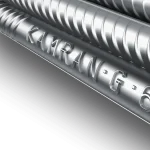
Whether you call it saria, sariya or sarya, loha, iron rod, TR bar or rebar, you are buying the same product: deformed steel reinforcement bars for RCC construction, sold by weight.
Steel Rate Today in Major Cities of Pakistan
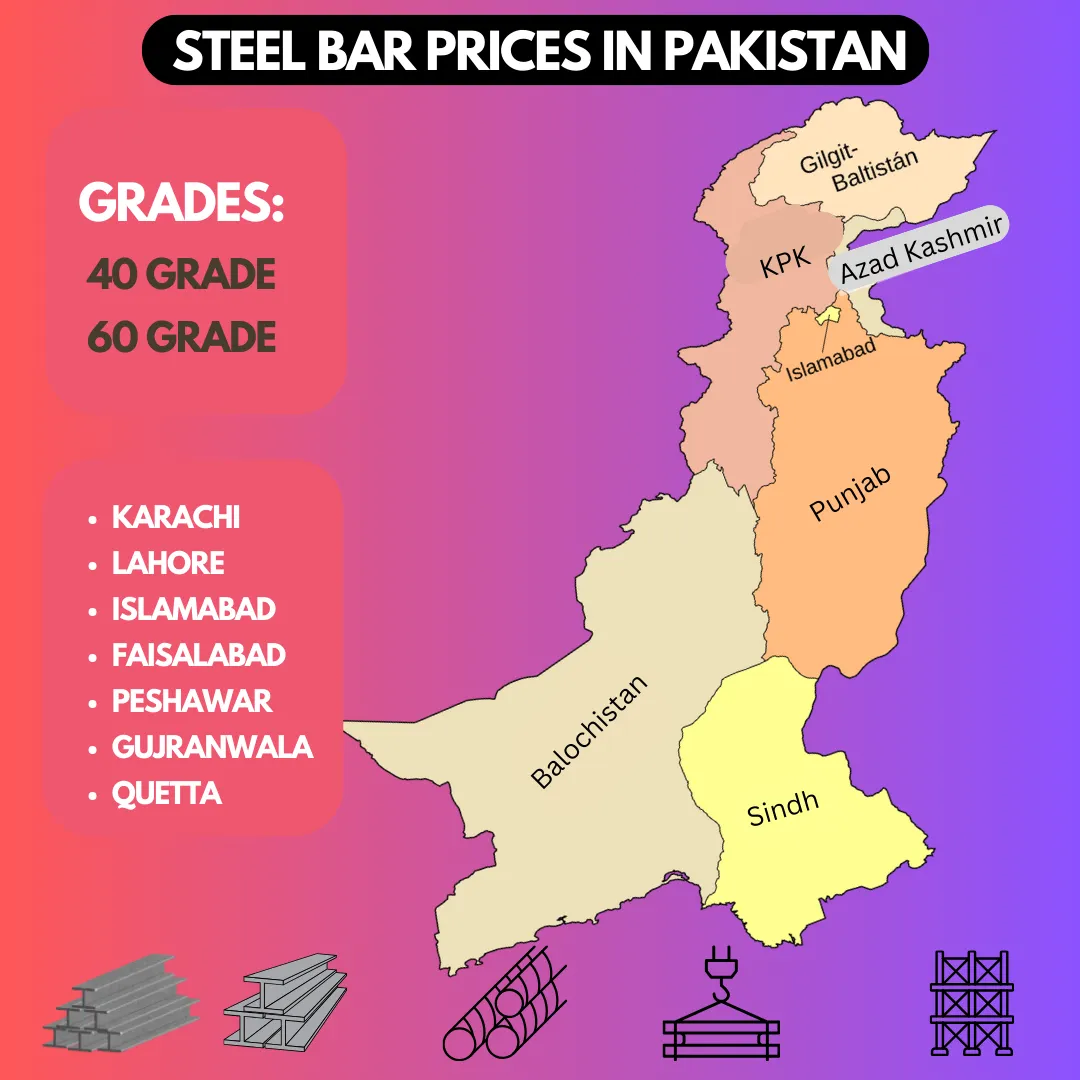
City-wise saria rates from Kamran Steel. The rate is identical in every city; only delivery charges differ.
| City | Grade 40 – Per Kg | Grade 40 – Per Ton | Grade 60 – Per Kg | Grade 60 – Per Ton |
|---|---|---|---|---|
| Lahore | Rs 275 | Rs 275,000 | Rs 277 | Rs 277,000 |
| Karachi | Rs 275 | Rs 275,000 | Rs 277 | Rs 277,000 |
| Islamabad | Rs 275 | Rs 275,000 | Rs 277 | Rs 277,000 |
| Rawalpindi | Rs 275 | Rs 275,000 | Rs 277 | Rs 277,000 |
| Faisalabad | Rs 275 | Rs 275,000 | Rs 277 | Rs 277,000 |
| Multan | Rs 275 | Rs 275,000 | Rs 277 | Rs 277,000 |
| Peshawar | Rs 275 | Rs 275,000 | Rs 277 | Rs 277,000 |
| Quetta | Rs 275 | Rs 275,000 | Rs 277 | Rs 277,000 |
| Hyderabad | Rs 275 | Rs 275,000 | Rs 277 | Rs 277,000 |
| Gujranwala | Rs 275 | Rs 275,000 | Rs 277 | Rs 277,000 |
| Sialkot | Rs 275 | Rs 275,000 | Rs 277 | Rs 277,000 |
| Bahawalpur | Rs 275 | Rs 275,000 | Rs 277 | Rs 277,000 |
Delivery (transportation) is charged separately at actual cost. Contact us for a delivery quote to your city.
Steel Price Per Kg, Per 40 Kg (1 Man), 50 Kg and Per Ton
| Quantity | Grade 40 Saria | Grade 60 Saria |
|---|---|---|
| 1 kg | Rs 275 | Rs 277 |
| 40 kg (1 maund / 1 man) | Rs 11,000 | Rs 11,080 |
| 50 kg | Rs 13,750 | Rs 13,850 |
| 100 kg | Rs 27,500 | Rs 27,700 |
| 500 kg (half ton) | Rs 137,500 | Rs 138,500 |
| 1 ton (1,000 kg) | Rs 275,000 | Rs 277,000 |
Loha (Iron) Rate Today – Sarya, TR Bar & Rebar Price
When people ask for the loha rate, iron rate or sarya rate for building work, they mean the price of steel reinforcement bars (rebar), also called iron rod or TR bar in many markets. Kamran Steel's loha rate today is Rs 277 per kg for Grade 60 and Rs 275 per kg for Grade 40, which is Rs 277,000 and Rs 275,000 per ton, the same in every city.
Kamran Steel makes deformed steel bars (Grade 40, 60 and 75 to ASTM A615, 10 mm to 36 mm). Girders, iron sheets and other iron products are not part of this rate.
آج کا سریا ریٹ (اردو میں)
کامران اسٹیل کا آج کا سریا (لوہے) کا ریٹ پورے پاکستان میں ایک ہی ہے:
- گریڈ 60 سریا: 277 روپے فی کلو، 11,080 روپے فی 40 کلو (ایک من)، 13,850 روپے فی 50 کلو، 277,000 روپے فی ٹن
- گریڈ 40 سریا: 275 روپے فی کلو، 11,000 روپے فی 40 کلو (ایک من)، 13,750 روپے فی 50 کلو، 275,000 روپے فی ٹن
ٹرانسپورٹ (کرایہ) الگ سے لیا جاتا ہے۔ اپنے گھر یا پراجیکٹ کا کل خرچ جاننے کے لیے ہمارا اسٹیل ریٹ کیلکولیٹر استعمال کریں یا ہم سے رابطہ کریں۔
Saria Rate by Size (Sutar / mm)
The rate depends only on the grade, not the bar size, so every Grade 60 size costs the same per kg. Sizes are listed below as they appear in our calculator.
| Size (Sutar) | Diameter | Grade 60 – Per Kg | Grade 60 – Per Ton |
|---|---|---|---|
| 3 sutar (#3, 3/8") | 10 mm | Rs 277 | Rs 277,000 |
| 4 sutar (#4) | 12 mm | Rs 277 | Rs 277,000 |
| 5 sutar (#5) | 16 mm | Rs 277 | Rs 277,000 |
| 6 sutar (#6) | 20 mm | Rs 277 | Rs 277,000 |
| 7 sutar (#7) | 22 mm | Rs 277 | Rs 277,000 |
| 8 sutar (#8) | 25 mm | Rs 277 | Rs 277,000 |
| #9 | 29 mm | Rs 277 | Rs 277,000 |
| #10 | 32 mm | Rs 277 | Rs 277,000 |
| #11 | 36 mm | Rs 277 | Rs 277,000 |
Grade 40 saria is Rs 275 per kg (Rs 275,000 per ton). Our calculator currently lists it in 3 sutar (10 mm, 3/8").
Calculate Your Exact CostGet a Delivery Quote
Saria Rate Update History
We record every change to our saria rate here, so you can see when the price last moved.
| Date | Grade 40 (per ton) | Grade 60 (per ton) |
|---|---|---|
| 14 October 2026 | Rs 275,000 | Rs 277,000 |
| 11 October 2026 | Rs 275,000 | Rs 277,000 |
| 30 September 2026 | Rs 275,000 | Rs 277,000 |
| 24 September 2026 | Rs 275,000 | Rs 277,000 |
Grade 40 vs Grade 60 Saria – Which Should You Buy?
Grade 60 steel has a higher yield strength (60,000 psi) than Grade 40 (40,000 psi), so it carries more load for the same bar size. It is the standard choice for columns, beams and slabs in multi-storey buildings and larger projects. Grade 40 is used in lighter residential and non-structural work. At Kamran Steel the difference is only Rs 2 per kg (Rs 2,000 per ton). Read our full guide: Grade 40 vs Grade 60 steel.
Saria Rate in Pakistan – Frequently Asked Questions
What is the saria rate in Pakistan today?
Kamran Steel's saria rate today is Rs 277 per kg for Grade 60 and Rs 275 per kg for Grade 40. That is Rs 277,000 and Rs 275,000 per ton. The same rate applies across Pakistan.
What is the price of 1 ton of saria in Pakistan?
One ton (1,000 kg) of Grade 60 saria costs Rs 277,000, and one ton of Grade 40 saria costs Rs 275,000. Transportation is charged separately.
What is the sariya ka rate for 40 kg (1 man)?
40 kg (one maund, or 1 man) of Grade 60 sariya costs Rs 11,080, and 40 kg of Grade 40 sariya costs Rs 11,000.
What is the sarya rate in Pakistan today?
Sarya is another spelling of saria. Kamran Steel's sarya rate today is Rs 277 per kg for Grade 60 and Rs 275 per kg for Grade 40 (Rs 277,000 and Rs 275,000 per ton), the same in every city.
What is the loha (iron) rate in Pakistan today?
For construction steel (loha, iron rod or rebar), Kamran Steel's rate today is Rs 277 per kg for Grade 60 and Rs 275 per kg for Grade 40. Transportation is charged separately.
What is the price of 50 kg saria?
50 kg of Grade 60 saria costs Rs 13,850, and 50 kg of Grade 40 saria costs Rs 13,750.
Is a TR bar the same as saria or rebar?
TR (or tor) bar is a common local name for ribbed reinforcement bars. Kamran Steel's deformed bars (Grade 40 and Grade 60, ASTM A615) are priced at Rs 275 and Rs 277 per kg.
آج سریا کا ریٹ کیا ہے؟
کامران اسٹیل کا آج کا ریٹ گریڈ 60 سریا کے لیے 277 روپے فی کلو اور گریڈ 40 کے لیے 275 روپے فی کلو ہے۔ ایک ٹن گریڈ 60 سریا 277,000 روپے کا ہے۔
Is the steel rate different in Lahore, Karachi or Islamabad?
No. Kamran Steel charges the same saria rate in every city. Only the transportation cost changes with your delivery location.
Does the price change with bar size (sutar)?
No. Every Grade 60 size from 3 sutar (10 mm) to #11 (36 mm) is Rs 277 per kg. The price depends only on the grade.
What is the difference between Grade 40 and Grade 60 saria?
Grade 60 has a yield strength of 60,000 psi and Grade 40 has 40,000 psi. Grade 60 is stronger and is recommended for structural work. It costs Rs 2 per kg more.
How can I calculate the total cost of steel for my project?
Use our free Steel Rate Calculator. Choose the grade and size, enter the weight in tons, and you get an instant estimate that you can print or save.
Related reading: How Much Steel for a 5, 7 or 10 Marla House · Grade 40 vs Grade 60 Steel · How to Calculate the Weight of Steel Bars · Top Steel Suppliers in Pakistan · Kamran Steel Products
What Moves the Saria Rate – October 2026 Update
Kamran Steel's rate has held steady since 24 September 2026: Rs 277 per kg for Grade 60 and Rs 275 per kg for Grade 40 (see the Saria Rate Update History above). When the rate does change, it is usually for one of these reasons.
1. Scrap and billet costs
Most reinforcement bars in Pakistan are made by melting steel scrap into billets and rolling them into bars, and much of that scrap is imported. When international scrap prices rise, the mill's main raw-material cost rises with them.
2. The rupee–dollar exchange rate
Imported scrap is paid for in dollars, so a weaker rupee raises costs even when world scrap prices are flat. The current USD/PKR rate is published daily by the State Bank of Pakistan.
3. Electricity and gas tariffs
Melting and rolling steel uses a great deal of power. Changes in industrial electricity and gas tariffs feed directly into the cost of every ton.
4. Taxes, duties and demand
Sales tax, import duties on scrap and the pace of construction activity, from private housing to public projects, also push rates up or down.
What this means for buyers
Rates can move within weeks, so an old price list or screenshot is not a reliable guide. Before a large order, check the date at the top of this page or call Sales on +92 42 3728 6582, and use the steel rate calculator to price your order by bar size.
Calculate your steel costs instantly!
Have questions about Kamran Steel?
Summary
Traders, contractors and home builders in Pakistan need a reliable, current steel rate to plan their budgets. The rates on this page are Kamran Steel’s own prices, taken from our Steel Rate Calculator, and we update the Saria Rate Update History table whenever they change. For a delivered price to your site, contact our sales team.