
Reinforcement in construction is what turns concrete into a material that can carry real buildings. Concrete alone is strong when squeezed but cracks easily when pulled or bent. Steel reinforcement bars (rebar, or saria) carry that tension, so beams, slabs and columns can hold loads safely. This guide explains what reinforcement does, where it goes, and how to get it right on site.
What Does Reinforcement Do?
When a beam carries a load, its top is squeezed (compression) and its bottom is stretched (tension). Concrete handles the compression well, but its tensile strength is only about a tenth of its compressive strength. Therefore, steel bars placed in the tension zone take the pulling force. In addition, steel and concrete expand by almost the same amount with temperature, and concrete protects the steel from rust. As a result, they work together as reinforced concrete (RCC).
Where Reinforcement Goes in a Building
| Element | What the steel does |
| Foundations and footings | Spread loads to the soil and resist bending |
| Columns | Carry vertical loads; ties stop bars buckling and confine concrete |
| Beams | Resist bending (main bars) and shear (stirrups) |
| Slabs | Carry floor loads between beams or walls |
| Lintels and stairs | Span openings and carry foot traffic |
| Retaining walls and water tanks | Resist soil and water pressure |
Types and Grades of Reinforcement
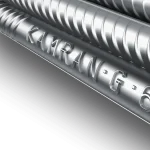
Modern construction uses deformed bars, whose ribs grip the concrete. Most are TMT bars, quenched after rolling for strength and ductility. In Pakistan, the common grades to ASTM A615 are Grade 40, Grade 60 and Grade 75. Read more in types of steel bars and different grades of steel bars.
Why Good Reinforcement Matters
- Safety: correct steel keeps the structure standing under design loads.
- Earthquake resistance: ductile steel lets the building bend without collapsing. See steel bars in earthquake-resistant design.
- Crack control: well-placed bars keep cracks small and closed.
- Durability: good cover and quality steel help the structure last for decades.
Good Practice on Site
- Follow the structural drawings and bar bending schedule exactly.
- Use the specified grade, usually Grade 60, and never reduce bar sizes.
- Keep the concrete cover with proper cover blocks.
- Tie bars firmly so they do not move during concreting.
- Use correct lap lengths and hooks, especially in columns and beams.
- Check bars on delivery for marks, weight and condition. See how to calculate the weight of steel bars.
Reinforcement Bars from Kamran Steel
Kamran Steel has manufactured deformed steel bars in Lahore since 1984. We supply Grade 40 and Grade 60 bars to ASTM A615 in sizes from 10 mm to 36 mm. Check today’s steel rate in Pakistan, estimate your order with the steel rate calculator, or contact our sales team.