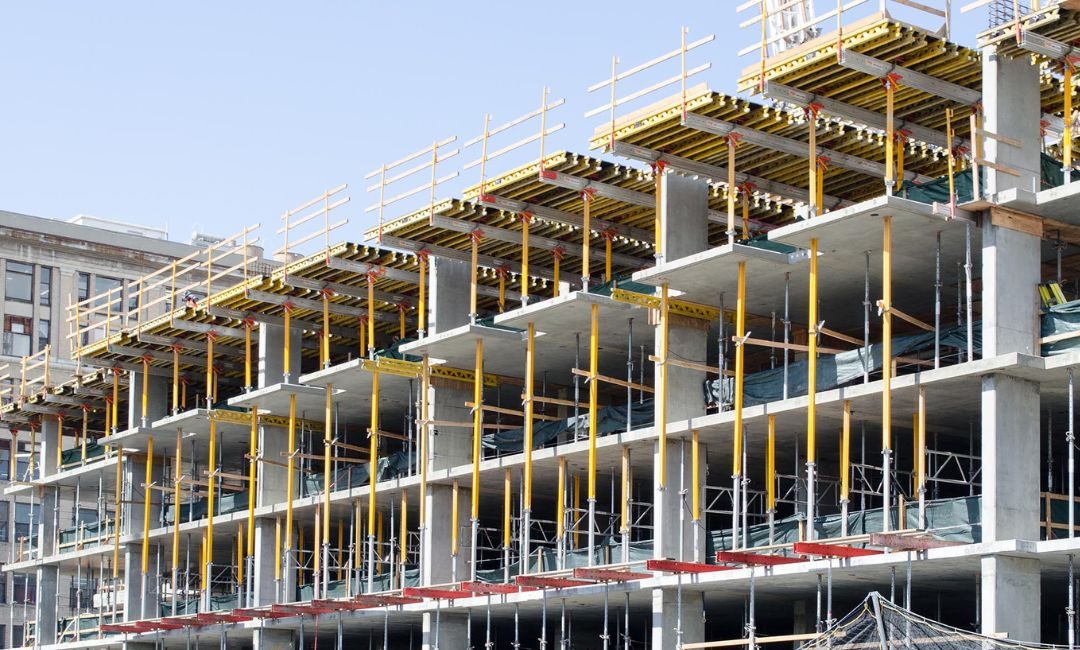
Steel in high-rise construction faces bigger demands than in ordinary buildings. Tall buildings carry heavy vertical loads, resist wind and earthquakes, and pack large amounts of reinforcement into columns, cores and transfer slabs. This article explains how high-rise buildings use steel reinforcement and what they need from it.
How Tall Buildings Are Structured
Most high-rise buildings in Pakistan are reinforced concrete structures. Typically they include:
- Foundations: thick rafts or piled foundations with very heavy reinforcement.
- Cores and shear walls: concrete walls around lifts and stairs that resist wind and earthquakes.
- Columns: heavily loaded at lower floors, often with large-diameter bars.
- Slabs and transfer structures: floors and deep beams that carry loads around changes in the layout.
What High-Rise Buildings Need from Steel
| Requirement | Why it matters |
| High strength (Grade 60, sometimes Grade 75) | Reduces bar congestion in heavily loaded members |
| Ductility | Tall buildings in seismic zones must bend without failing |
| Large diameters (25 to 36 mm) | Needed in columns, cores and foundations |
| Consistent quality and testing | Hundreds of tons must perform the same way |
| Reliable, staged delivery | Floor cycles depend on steel arriving on time |
Practical Challenges on Tall Buildings
Congestion
Lower columns and joints can be packed with steel. Therefore, engineers use higher grades, careful detailing and mechanical couplers so concrete can still flow and compact properly.
Splicing large bars
Long laps of large bars add weight and congestion, so couplers are common in columns and cores.
Earthquake design
Tall buildings in Pakistan’s seismic zones need ductile steel and strict detailing under the Building Code of Pakistan (Seismic Provisions). See steel bars in earthquake-resistant design.
Logistics
City-centre sites have little storage space, so staged deliveries and prefabricated cages help keep work moving.
Choosing Steel for a High-Rise Project
- Specify the grade and standard in the contract (for example, ASTM A615 Grade 60).
- Require mill test certificates and traceable bars.
- Agree staged deliveries matched to the floor cycle.
- Test samples on site as the specification requires.
For more, read what engineers look for in high-tensile steel bars and steel certifications explained.
Steel for Tall Buildings from Kamran Steel
Kamran Steel has manufactured deformed steel bars in Lahore since 1984. We supply Grade 40 and Grade 60 bars to ASTM A615 in sizes from 10 mm to 36 mm, with mill test certificates and staged delivery. Check today’s steel rate in Pakistan or contact our sales team.
For a high-rise order, our steel rate calculator gives a fast cost estimate by grade and tons. You can see buildings and infrastructure built with our steel on the Kamran Steel projects page.
Related reading: Iconic buildings and mega projects built with steel · How urbanization in Pakistan drives steel demand