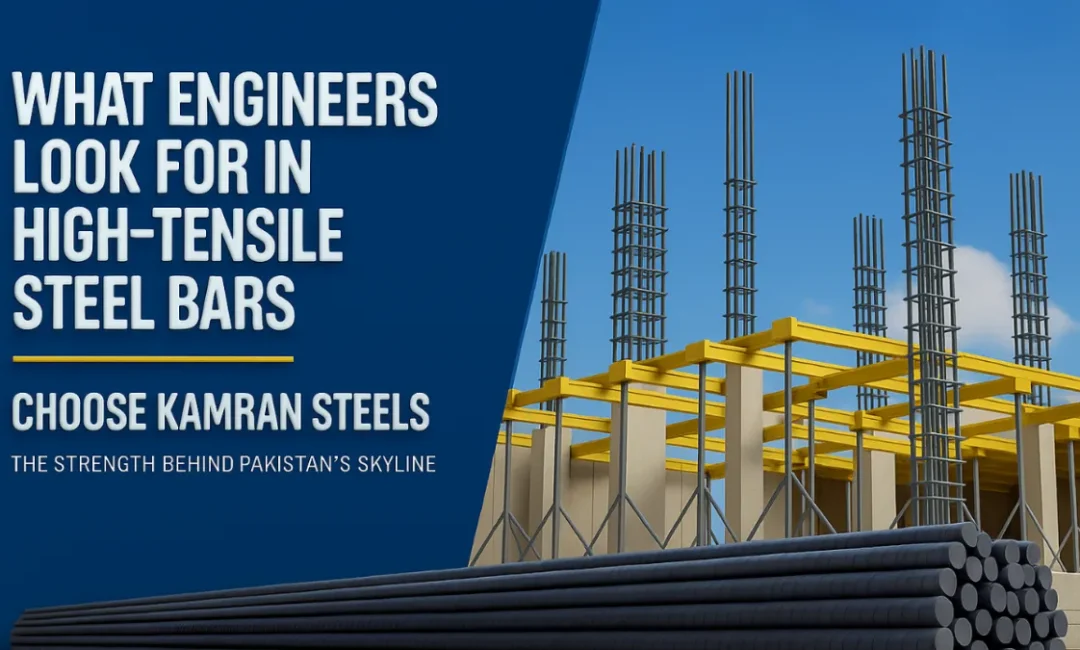
What Engineers Look for in High-Tensile Steel Bars
High tensile steel bars are the reinforcement of choice for most modern structures in Pakistan. They carry more load per bar than mild steel, so engineers can design leaner, more efficient members. However, strength alone is not enough. This guide explains the properties engineers check when they specify and accept high tensile steel bars.
What Are High Tensile Steel Bars?
High tensile steel bars are deformed reinforcement bars with a high yield strength, typically Grade 60 (420 MPa) or Grade 75 (520 MPa) under ASTM A615. In contrast, mild steel has a much lower yield strength. Higher strength means fewer or smaller bars for the same load.
8 Properties Engineers Check
1. Yield strength
Yield strength is the stress at which a bar starts to stretch permanently. Engineers design with this value, so the bars must meet at least the minimum for their grade.
2. Tensile strength and the tensile-to-yield ratio
Tensile strength is the maximum stress before the bar breaks. In addition, engineers look at how much higher it is than the yield strength. A healthy margin means the bar keeps carrying load after it starts to yield, which improves safety.
3. Elongation (ductility)
Elongation shows how much the bar stretches before breaking. Ductile bars give warning before failure and absorb energy in an earthquake, so this property matters a great deal in Pakistan.
4. Bendability
Bars must bend to the shapes in the bar schedule without cracking. The bend test in the standard checks this.
5. Bond with concrete
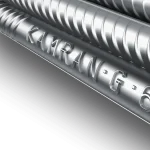
Well-formed, even ribs give a strong grip with concrete. Damaged or low ribs reduce the bond.
6. Correct weight and size
The bar’s weight per metre should be close to D² ÷ 162. Underweight bars have less steel than the design assumes. See how to calculate the weight of steel bars.
7. Chemical composition
Controlled carbon, phosphorus and sulphur keep the steel ductile. If a project needs welding, the engineer may also specify limits on chemistry or a weldable grade.
8. Test certificates and traceability
Finally, engineers ask for the mill test certificate for each batch and check the manufacturer’s rolled-in marks. For more, read steel certifications explained.
Minimum Values Under ASTM A615
| Grade | Minimum yield strength | Minimum tensile strength |
| Grade 60 | 420 MPa (60,000 psi) | 620 MPa (90,000 psi) |
| Grade 75 | 520 MPa (75,000 psi) | 690 MPa (100,000 psi) |
For the full picture of how these values relate, see steel stress-strain curves explained.
High-Tensile Bars from Kamran Steel
Kamran Steel has manufactured deformed steel bars in Lahore since 1984. We supply Grade 60 high tensile steel bars, as well as Grade 40, to ASTM A615 in sizes from 10 mm to 36 mm. Ask for the mill test certificate with your order. Check today’s steel rate in Pakistan or contact our sales team.
For a quick cost estimate on high-tensile bars by size and quantity, use our steel rate calculator.
Related reading: How to Test Steel Bar Quality · Different Grades of Steel Bars · Grade 40 vs Grade 60 Steel · Bendability & Weldability of Steel Bars: Why It Matters in Large Projects