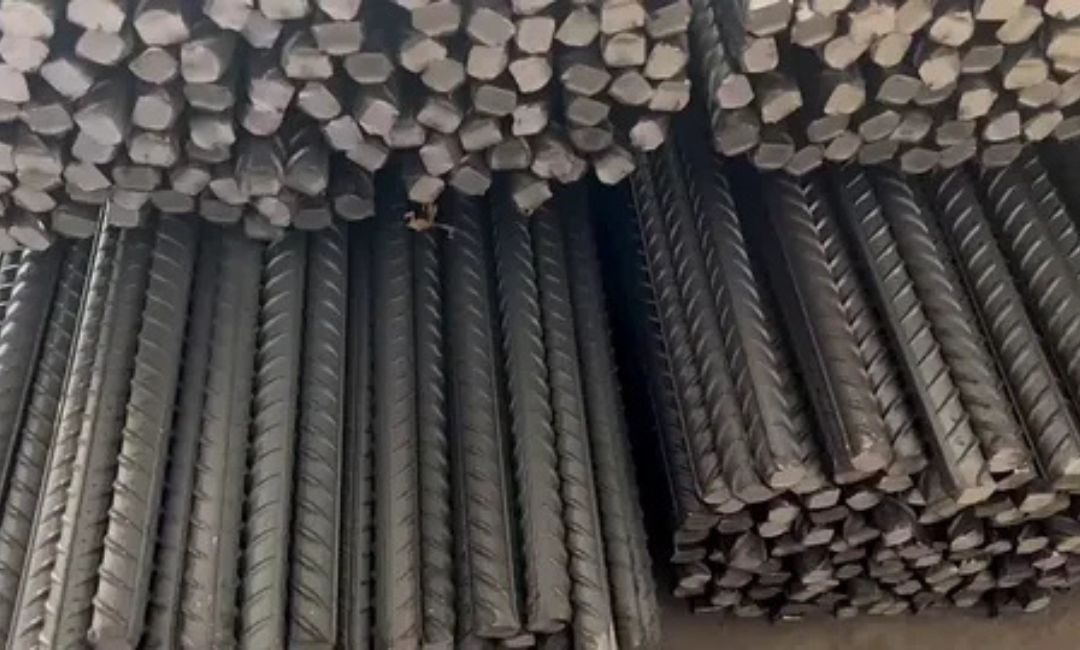
Deformed vs plain steel bars is one of the first choices in any reinforced concrete job. Both are steel, but their surfaces are different, and that changes how well they grip concrete. As a result, builders use them for very different purposes. This guide compares the two and explains where each belongs.
For rate calculations, use Kamran Steel’s steel rate calculator.
What Are Deformed Steel Bars?
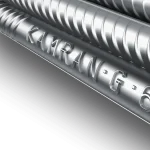
Deformed bars carry ribs on their surface. The ribs lock the bar into the concrete, so the two materials act together and loads pass from concrete to steel without slipping. For this reason, deformed bars are the standard reinforcement for columns, beams, slabs and foundations. Mills make them to standards such as ASTM A615, in Grades 40, 60 and 75.
What Are Plain Steel Bars?
By contrast, plain bars have a smooth, round surface with no ribs. They bend and cut easily. However, concrete can only hold them by friction and adhesion, which is much weaker than the grip of ribs. Therefore, engineers use plain bars where the bar must slide, or where the job is not structural.
Deformed vs Plain Steel Bars: Comparison
| Feature | Deformed bars | Plain bars |
| Surface | Ribbed | Smooth |
| Bond with concrete | Strong mechanical bond | Weak; relies on friction |
| Strength grades | Grade 40, 60 and 75 | Usually mild steel |
| Main use | All structural reinforcement | Dowels at joints, light non-structural work |
| Earthquake design | Needed for main reinforcement | Not suitable for main reinforcement |
Where to Use Deformed Bars
- Columns, beams, slabs and footings in houses and buildings
- Bridges, flyovers and retaining walls
- Any structure designed for earthquake resistance
Where to Use Plain Bars
- Dowel bars at expansion and contraction joints in concrete pavements, where the bar must slide
- Light fabrication and non-structural work
Which Should You Use?
Above all, for any structural work, use deformed bars of the grade in your drawings. In fact, modern codes require deformed bars for main reinforcement. Meanwhile, use plain bars only where your engineer specifies them, such as pavement dowels. To go further, read about the types of steel bars and Grade 40 vs Grade 60 steel.
Deformed Bars from Kamran Steel
Kamran Steel manufactures deformed steel bars in Grade 40 and Grade 60 to ASTM A615, in sizes from 10 mm to 36 mm. See our products, check today’s steel rate, or contact our sales team.
Related reading: TMT vs Cold Twisted Bars · Different Grades of Steel Bars · Steel Certifications Explained