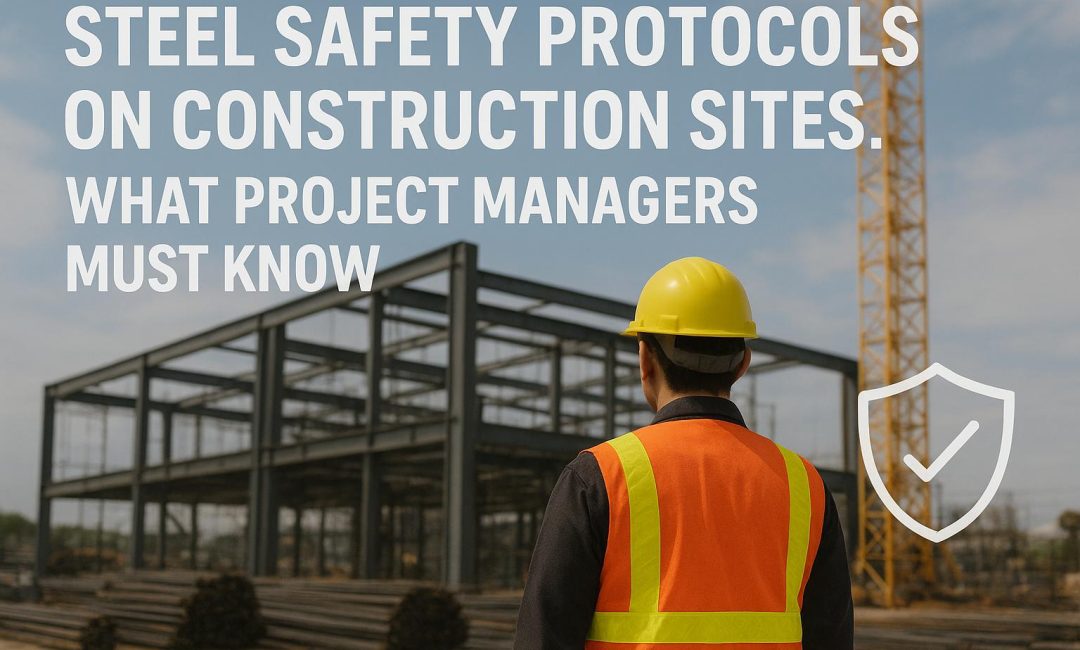
Steel safety on construction sites deserves as much attention as steel quality. Reinforcement bars are heavy, long and sharp, and workers handle them every day. As a result, injuries from lifting, cutting, falling bundles and exposed bar ends are common. This guide lists the main hazards and the protocols project managers should put in place.
Main Hazards When Working with Steel Bars
- Impalement: workers falling onto exposed, upright bar ends.
- Manual handling injuries: back and hand injuries from carrying heavy bars.
- Falling loads: bundles slipping during lifting or unloading.
- Cuts and eye injuries: from cutting, grinding and bending tools.
- Trips and falls: from bars left on walkways or working at height on mesh.
- Electrical and fire risks: from powered tools and any welding or gas cutting.
Safety Protocols to Enforce
1. Protect exposed bar ends
Cover every upright starter bar with a rebar safety cap or bend it over, especially near walkways and work areas below.
2. Lift and move bars safely
Use cranes or proper slings for bundles, with two-point lifting for long bars. Keep people out from under suspended loads. For manual carrying, use two or more workers for long or heavy bars.
3. Stack and store correctly
Store bars on sleepers, in stable stacks of limited height, sorted by size and away from walkways. See how to store steel bars on site.
4. Use tools properly
Only trained workers should use cutting and bending machines. In addition, guards must stay in place, and tools must be inspected regularly.
5. Provide the right PPE
Supply and enforce helmets, safety shoes, gloves and eye protection. Add hearing protection near cutting machines, and harnesses when working at height.
6. Control hot work
Allow welding or gas cutting only with the engineer’s approval, a hot-work permit and a fire extinguisher at hand.
7. Keep walkways clear
Remove offcuts and binding wire daily. Also, provide safe access over reinforcement mats, such as boards laid across the bars.
Safety Checklist for Project Managers
| Area | Check |
| Exposed bars | Caps fitted or ends bent over |
| Lifting | Slings inspected, exclusion zone marked |
| Storage | Stable stacks, clear walkways |
| Tools | Guards fitted, operators trained |
| PPE | Worn by every worker |
| Hot work | Permit and extinguisher |
| Housekeeping | Offcuts and wire removed daily |
Safety Starts with the Right Steel
Finally, remember that structural safety depends on correct, tested steel. Check every delivery and keep records. See steel bar testing on site and plan quantities with the steel rate calculator.
When you buy steel for your site, compare quotes with the official steel rate in Pakistan today.
Kamran Steel has manufactured deformed steel bars in Lahore since 1984, supplying Grade 40, Grade 60 and Grade 75 bars to ASTM A615. Contact our sales team.