
Steel is not merely a material, but the backbone of current infrastructure. Considering tall skyscrapers, long-span bridges, residential complexes, and industrial establishments, steel bars (popularly referred to as rebars) are the parts of the invisible skeleton that provides the building with durability and firmness. But what exactly happens to these steel bars in between their raw state and the center of the construction sites?
This blog invites you on an interesting expedition, step by step, through the world of steel bars, but at the same time it explains how Kamran Steel makes sure that every steel bar is of the utmost quality, consistency and performance.
1. At the Beginning of the Trail Sourcing of Raw Materials
It all starts with raw materials, which, in the majority of cases, is presented in the form of scrap steel and iron. This scrap is gathered and sifted out of several places such as demolished constructions, antiquated automobiles, industry wastes, and other areas.
Sourcing at Kamran Steel is not all about collecting raw inputs but making right choices of the recyclable materials that can be used to convert high-strength steel.
2. The Foundry Stage -Melting and Purifying
The foundry is at the core of steel making. The scrap is then charged into gigantic electric arc furnaces (EAFs) which melt the scrap at temperatures above 1,600C.
Central Processes in This Stage:
- Melting: Scrap is turned to molten steel.
- Purification: impurities including sulfur, phosphorus, and undesirable quantities of carbon are eliminated.
- Alloying: Alloying elements such as Manganese or Chromium are added to improve either strength, ductility or corrosion resistance.
Kamran Steel has the latest refining technology to make sure that the steel used has the right chemical composition to exact engineering specifications–batch after batch.
3. Voting Acting in Decision-Making capacity on behalf of the Steel
After being cleaned, molten steel goes into continuous casting machines. This heating produces billets of molten metal, hardened steel, but in the form of solid, rectangular or square bars.
Billet significance:
- They dictate the grain structure of the steel, their tensile strength and flexibility.
- Regular billet quality translates to regular end-products.
The entire process of casting is automated in Kamran Steel production to avoid casting defects such as air pockets or an uneven surface so that the cast can be free of fault or systematic structure before passing to the next stage.
4. Hot Rolling Billets to Steel Bars
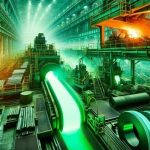
Billets are melted in the rolling mill to approximately 1,100 o C and different rollers are rolled over them. After every single pass, the billet is thinner and longer, and also nearer the required diameter.
Phases of Rolling:
- Roughing: Initial roughing.
- Intermediate Rolling: Thickness and length.
- Finishing: Obtaining the correct sizes and finish.
Kamran Steel based on recent technology & sensors and automation in the rolling mills ensures uniformity and hence all the bars become acceptable to Pakistan Standard (PS) and British Standard (BS).
5. Quenching and Tempering-Hardening the Heart
The Thermo-Mechanical Treatment (TMT) process is one of the most essential processes. After rolling, bars are very quickly cooled under spray of high-pressure water jets, which is called quenching. This makes the outer dry and the inside soft and plastic.
TMT Processing advantages:
- Great tensile strength
- Excellent bendability
- Better performance against earthquakes
The TMT process of Kamran Steel is standardized and the controls on this process are of a very precise nature thus causing the engineers to have the confidence to use such bars in locations where such applications must support a lot of strength.
6. Quality Testing – No Room for Compromise
Before a steel bar leaves the manufacturing plant, it undergoes rigorous quality control tests.
Common Tests Include:
| Test Type | Purpose | Kamran Steel Standard |
| Tensile Test | Measures strength and elongation | Exceeds PS & BS requirements |
| Bend & Re-bend Test | Checks ductility and flexibility | Zero surface cracks |
| Chemical Analysis | Ensures correct composition | Automated lab testing |
| Weight Tolerance | Confirms exact size and weight | ±0.5% deviation |
Kamran Steel’s fully equipped in-house labs allow real-time quality checks, ensuring each batch matches the company’s strict performance standards.
7. Bundling, Cutting and Tagging
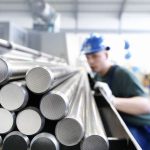
Once all the tests have been concluded, the steel bars are cut into standard lengths (typically 12 meters) and wrapped together. The bundles are labeled with:
- Batch number
- Steel grade of steel
- Production date
- Certification marks
This traceability scheme enables the contractors and engineers to authenticate the quality and authenticity of their products real time.
8. Inventory and Logistics pre-ready to be Dispatched
Bar stock is kept in well ventilated yards that are rust-proofed until it is time to send out. The logistics team at Kamran Steel guarantees the delivery of goods within its network on time without much delay to construction sites in Pakistan.
9. Going to the Construction Site
When at the site, the steel bars are offloaded, inspected and stored until the time they are used. Many journeys have been made–the scrap melted down and recast into an accurately designed bar; now they are ready to be put to work.
Why Kamran Steel Stands Out
There are a lot of steel manufacturers producing rebars, however, in Kamran Steel the process is established on three pillars:
- Sustainability- The scrap is recycled and makes the carbon friendlier.
- Conformity Automation and testing will produce the identical batch.
- Reliability-The products are at international standards and in most cases surpass them.
Whether it is designing earthquake-proof skyscrapers or constructing concrete infrastructure, Kamran Steel offers engineers reassurances that the materials used will display their expected characters- absolutely every time!
Conclusion foundry sparks to foundation strength
The path of a steel bar does not consist only of stages of manufacture, but rather represents a narrative of evolution, accuracy and quality verification. Advanced technology, a sound workforce and a strong commitment to quality drive this journey at Kamran Steel.
It is the same story with every batch of scrap metal that it takes: whether a discarded scrap, a strong burden of heat and pressure, a harsh test and the end result is the silent vigil of the modern infrastructure of Pakistan.
Recent Comments