

The growth in Pakistan’s infrastructure is mainly thanks to the large amount of investment being put into road development. Trade through these routes grows regional collaboration because it leads to higher trade and a boost in the local economy. Since the US landscape is complex and disconnected, it needs strengthened bridges to preserve the security and durability of areas along the highways and roads.
The Imperative for Infrastructure Development
Because Pakistan is close to China, India, Afghanistan, and Iran, it becomes very important for regional commerce. Noticing this possibility, the government has officially begun working on big upgrades and expansions of its road systems. The objective of projects like these is to streamline moving goods and people, lower travel times, and connect remote locations to the wider economic system.
CPEC, under China’s BRI, is a clear example of how strongly China and Pakistan desire to cooperate. The CPEC project includes building highways, railways, and energy systems to strengthen links between the Gwadar Port in Pakistan and China’s Xinjiang area. Although trade is a main reason for this corridor’s existence, it also supports the economies of places found along its course, so it needs strong and reliable infrastructure, like bridges.
Challenges in Bridge Construction
The country’s mountains and plains bring various problems for building its infrastructure. Since bridges in mountainous, riverine, and flood-prone areas can face various problems, they require special engineering designs to remain safe and last. Weather extremes can make it hard to rely on traditional building methods; this is why we need alternatives that prove stronger and more flexible.
For these situations, steel bridges bring several benefits. They are strong for their weight, which means longer lengths and fewer supports are possible. Thanks to its ductility, steel is safe from damage under earthquakes since Pakistan often faces these. In addition, since they are prefabricated, steel bridges can be quickly assembled and pose less hassle to people using the roads
Case Study: Fort Munro Steel Bridge
The Fort Munro Steel Bridge, often called the Rakhi Gaaj Project, is a good example of how well steel bridges have been built in Pakistan. The bridge is in the Punjab region and, at 1.5 kilometers long and 150 feet tall, is Asia’s second-largest steel bridge. To better move goods and people across hilly ground, the bridge was built with JICA’s aid and includes eight linked steel segments.
This steel bridge demonstrates both the added power of working together internationally and the use of state-of-the-art engineering to address obstacles caused by geography. Doing this successfully means other states are likely to attempt similar projects.
Collaboration with Important Infrastructure Efforts
National and regional connectivity in Pakistan is being significantly changed by the country’s expanding network of highways, bridges, and expressways. Since ambitious infrastructure projects are on the rise, the country requires stronger, longer-lasting materials such as Grade 60 steel. The following projects highlight the shift that took place.
Motorway M6 between Sukkur and Hyderabad
The M-6 Motorway is particularly important on the Karachi–Peshawar Motorway (KPM) and stretches over 306 kilometers. Its purpose is to fill the gap between northern and southern Pakistan by connecting busy northward commercial and population centers to southern Sindh.
89 bridges, 15 interchanges, 243 underpasses, and selected locations for service facilities and rest stops are part of this structure. Axle loads, busy traffic, and environmental conditions such as high temperatures and occasional flooding affect these structures.
To ensure they last and remain safe, these bridges and underpasses are reinforced with high-strength steel such as Grade 60 rebar because it can withstand earthquakes, has a high yield strength, and is cost-effective where these structures are long.
Once the project is done, M-6 will make travel faster, support cargo movement, and lift the economy of underserved regions in Sindh and southern Punjab.
The Khyber Pass Economic Corridor project
The World Bank is helping finance the Khyber Pass Economic Corridor, a project built to boost economic links between Pakistan and both Afghanistan and Central Asia. European companies will build a four-lane highway that stretches 50 kilometers from Peshawar to the Torkham border.
KPEC helps increase Pakistan’s role as an important hub for trade, enabling easier movement of goods across borders. It promotes the development of the Trans-Afghan Trade Corridor and helps countries in the region cooperate.
Constructing retaining walls, tunnels, and bridges along this path is challenging because there are hills, complex rocks, and frequent earthquakes.
Ductility, rust resistance, and how well it fits with concrete are why experts incorporate durable Grade 60 steel into bridge construction, retaining walls, decks, and groundworks in seismic areas.
Eco View: It is better for the environment because using durable materials can cut maintenance expenses and ensure the logistics run constantly.
Gwadar’s East Bay Expressway
Part of the CPEC, the 19-kilometer six-lane expressway runs between Gwadar Port and the Makran Coastal Highway. The system provides a way to uplift significant amounts of cargo from the port to destinations in the country.
The empowers freight movement from Gwadar to Pakistan and on into Chinese and Central Asian economies. It is vital for CPEC Phase I and should improve Gwadar as a key regional center for shipping and logistics.
The design for this project consists of new embankments, box culverts, and retaining walls near the sea; such areas are very vulnerable to degradation by the environment, salt, and sea humidity.
Since steel grade 60 is both strong and corrosion resistant, it is best suited for building near the sea. Marine projects find that Grade 60 rebar covered with epoxy or stainless steel stays in working condition for longer periods.
Money for the project is loaned by Chinese state banks, and its construction is overseen by the China Communications Construction Company (CCCC). The project will play a role in helping Pakistan draw foreign investment to its special economic zones (SEZs).
The Role of Public-Private Partnerships
Because large infrastructure projects present both financial and technical hurdles, NHA (Pakistan’s National Highway Authority) has introduced PPPs to get private firms involved in its work. Creating a PPP Cell serves to inspire private capital and experience to be used in developing highways, tunnels, bridges, and motorways.
Getting private firms involved improves the speed of finishing programs, shares new ideas for construction, and lessens budget pressure for the government. Also, thanks to PPPs, knowledge and effective construction methods can move easily, raising the standard and environmental sustainability of projects.
International Collaboration and Funding
Pakistan has made progress in infrastructure thanks to the help and funding from international partners. The use of Japanese assistance made the steel in the Fort Munro Steel Bridge strong and with no need for maintenance for well over a hundred years. Thanks to international cooperation, the project was given a concessional loan at 0.2% and a payment period of 40 years.
The World Bank is also financing the Khyber Pass Economic Corridor for $482.75 million. Not only do such partnerships provide money, but they also introduce worldwide principles and practices for developing infrastructure
Kamran Steel: Supporting the Backbone of Bridge Construction
While Pakistan improves its roads and bridges, the need for high-quality steel has become much greater. Kamran Steel, which produces and supplies high-strength steel, is an important contributor to this development in Pakistan.
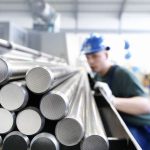
For more than five decades, Kamran Steel has been involved in supporting large national infrastructure projects with strong steel reinforcement bars (rebars) and steel parts. Because their products fulfill standards set by ASTM A615 and BSI BS4449, they are suitable for important parts of bridges, flyovers, expressways, and high-rise buildings.
Advanced rolling mills and high standards in quality control allow Kamran Steel to provide bridges with dependable tensile strength, sufficient ductility, and reliable corrosion resistance.
Their steel is involved in many projects financed by CPEC, such as bridges over rivers, valleys, and tough terrains. Their involvement shows that Pakistan is gaining confidence in its domestic steel for huge construction projects.
It is also noteworthy that Kamran Steel values sustainable development. The application of modern, energy-saving solutions and scrap metal recycling helps the company produce responsible products that are now crucial for infrastructure planners.
The use of quality, locally produced steel in bridges improves their structure and reduces reliance on artificial imports in this field. When linked, national industries and infrastructure projects help build a lasting chain of growth, new employment, and technological progress.
Conclusion
As the country seeks to meet the roads’ needs linked to expansion and regional trade, tougher and more durable bridges are necessary. Because they are stronger, more durable, and flexible, steel bridges can help tackle the country’s infrastructure problems. Using international support, including the private sector, and progress in construction design. Pakistan can develop a reliable and efficient transportation system for its long-term growth.
Recent Comments